Use the current battery rule and separate a missing item from an outdated quest trigger.
Any battery location can satisfy the patched task
Hotfix 0.8.6 changed the hatch battery task so that a battery found elsewhere counts; breaking a particular patch of ice is no longer required. If you already found a battery, the old acquisition-order requirement should not make you search for another.
That fix addresses how the quest recognizes the item. It does not mean that a battery automatically completes every interaction at the hatch, or that unrelated repairs can be skipped. Read the current objective and act on the target it names.
Check the item and the interaction separately
First establish that you have the battery available. Then approach the intended target and inspect its prompt. These are separate checks: having the requested object does not prove that you have placed it in the correct socket.
After placing it, read the objective again. If the wording changes, follow the new requirement. If it does not, note what the target did visually; a powered device and an unchanged quest can indicate a different problem from an object that was never accepted.
Avoid unnecessary backtracking
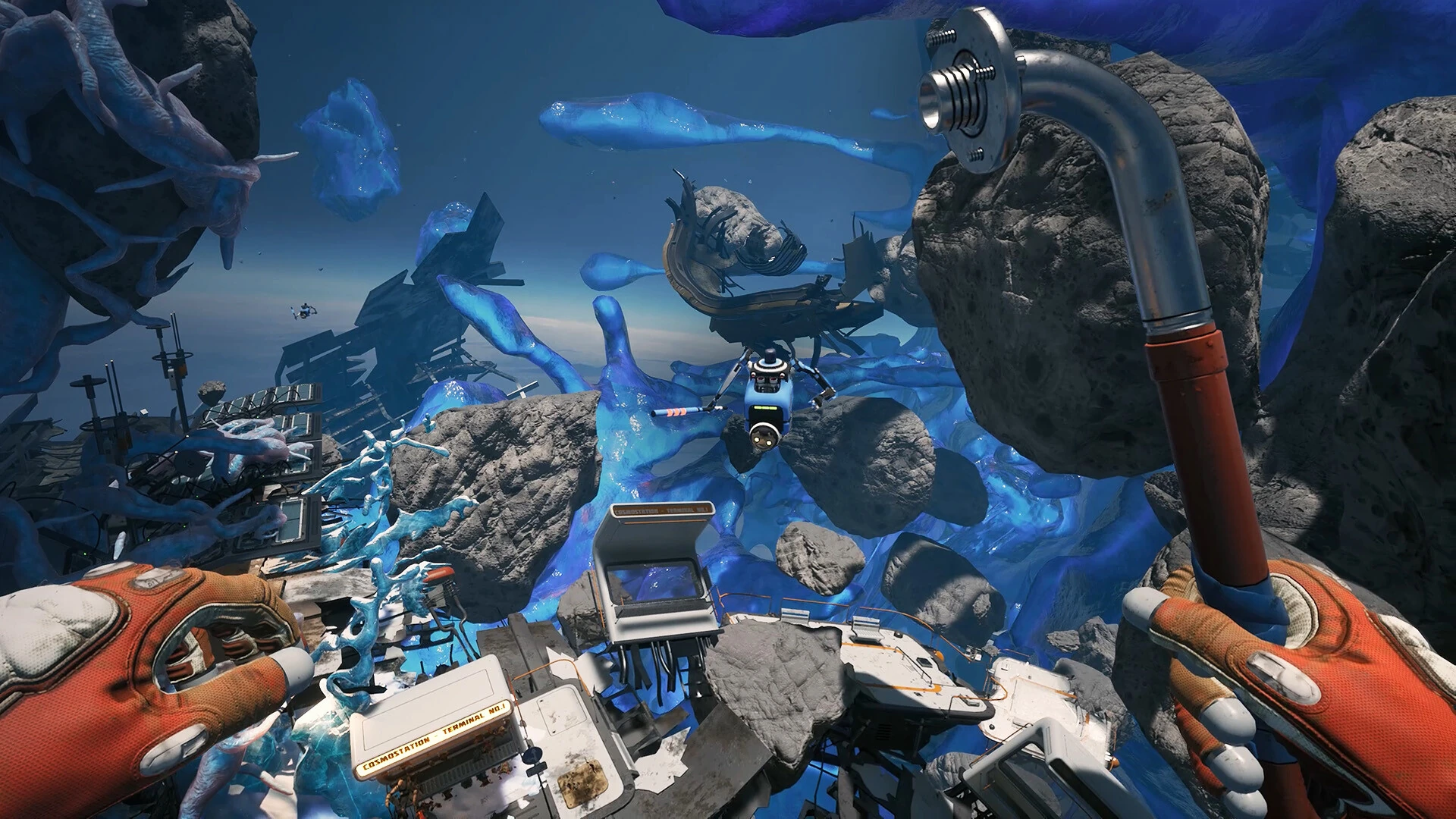
Do not return to the old ice location solely because a pre-patch video shows that route. The developer explicitly removed that dependency. Spend the time checking your installed version and present quest state instead.
If the item came from another device, make a note of where you obtained it. This helps you understand any change to that device later. The patch does not establish that all powered equipment can be left without a battery safely.
When an update does not resolve it
Record the exact objective, where the battery came from, whether it is carried or installed, and the game version. A screenshot of the target prompt helps distinguish this task from another battery-related objective.
This article covers the official hatch fix only. It deliberately avoids claiming a complete battery-location map or a universal crafting recipe, because the cited evidence does not provide either.
Optional detail: classify the stalled step
The immediate rule change is stated at the top. The remaining sections are optional diagnosis for a task that still does not advance. They do not add an extra battery location, a crafting recipe, or a secret interaction.
Begin by deciding which stage is incomplete. You may not have located a battery, you may have one but not be able to place it, or the placement may appear to succeed while the objective remains unchanged. These are three different problems.
For a missing item, the next question concerns finding the requested object. For placement, the next question concerns the target and interaction. For an unchanged objective after placement, the next question concerns what the game recognized. Keeping the stages separate prevents you from looking for a second battery when the first is already available.
Write the stage in one sentence before trying another action. This creates a testable question and helps you avoid repeating the entire old walkthrough whenever one step is unclear.
Confirm the item you actually have
Inspect the item or carried object using the information the game provides. Do not rely solely on a rough visual resemblance. A component found near machinery can look relevant without being the object named by the current task.
Record the displayed name if you are comparing languages or following a translated guide. The site’s wording may differ from the game’s localization. Pair the name with the current objective and the visible interaction rather than forcing an exact translation match.
Also distinguish available from previously found. If you used or left the object elsewhere, the fact that you once discovered it does not tell you where it is now. Reconstruct its last known location before searching another unrelated area.
The patch’s alternate-location acceptance means the old source of the item is not mandatory. It does not eliminate the need to have the actual object available for the current interaction. That distinction is the starting point for a useful diagnosis.
Inspect the placement target, not just the surrounding hatch
Approach the relevant assembly and look for the prompt on the specific target. A large hatch can contain several nearby parts, and the action may belong to one component rather than the whole structure.
Change your viewpoint enough to see which part is selected. If the wording changes across components, identify the one that matches the current objective. Do not keep using an input while the selected target drifts between different parts.
If you are carrying the battery, keep the target visible and observe whether the placement is accepted. A release near the socket and a completed placement are not necessarily the same action. Describe the visible result rather than assuming proximity was sufficient.
After acceptance, read the objective again. If it changes, follow the new requirement. If it does not, note whether the device changed visually or offered another prompt. That separates an unrecognized placement from a subsequent unfinished step without inventing either one.
Do not repeat an obsolete acquisition sequence
An older video may show the player breaking ice before using the battery. The documented fix removes that acquisition-order dependency for this task when the battery was obtained elsewhere. Recreating the video’s source path is therefore not the first useful response to having a suitable item already available.
Use the video to identify the general location if that still helps, then compare the interaction with your current build. Keep the useful visual context while discarding the obsolete assumption about where the item must come from.
If another guide insists that only one specific battery works, check its date and source. A confident instruction can remain indexed after the developer changes the rule. The official note provides a concrete reason to question that instruction.
This does not mean every battery-related objective in the game has identical behavior. Keep the task name attached to the fix. A solution for this hatch should not become a universal promise that any object powers every machine or skips every prerequisite.
Track a battery that came from somewhere else
If you moved the battery from another device, record the source location. That note helps you understand the state you left behind and recover the object if you later need to revisit your decision.
Do not assume the source device is unaffected. The hatch fix does not describe the consequences of removing power from every other machine. Inspect the current interface and visible behavior before treating a borrowed component as permanently free stock.
A useful record says where the object was, where you moved it, and whether the receiving target accepted it. This is enough to reconstruct the transfer without inventing an electrical system the guide has not verified.
If you decide to undo the move, inspect both devices after the change. Keep the result specific to what you see. A component transfer can be a useful experiment, but a successful transfer at one pair of devices does not establish an unrestricted rule for the rest of the game.
Work through three possible outcomes
Imagine that you approach with a battery and there is no placement prompt. Your next useful action is to inspect the target and current objective. Check whether you are selecting the right component and whether the task actually asks for placement at this moment. Searching for more batteries does not answer that question.
Now imagine the prompt appears but the object is not accepted. Confirm the item’s identity and whether you completed the displayed interaction. Record the result of one deliberate attempt. Do not rapidly repeat several different inputs, because that makes it harder to tell which action the game responded to.
Finally, imagine the placement is accepted and the object changes, but the objective remains. Read the current wording and inspect for the next action. If no relevant change is available, you have a focused state-transition report: the item was accepted, the device changed in this way, and the journal still says this.
These are hypothetical diagnostic branches, not claims about additional bugs in the current build. Their purpose is to turn the broad complaint that the battery quest is broken into an observation another person can investigate.
Check the update without guessing a build number
Confirm that your storefront has finished the relevant update, then use whatever version information the game exposes. Do not copy a guide’s version badge into your report as though it described your own installation.
If the build identifier is not visible, state the storefront and the time of the completed update. That is more useful than inventing certainty. A developer can still investigate a well-described task state when one identifier is unavailable.
After updating, repeat the smallest relevant interaction rather than replaying the whole opening. If the question is item acceptance at the hatch, test that acceptance. If the issue concerns a changed objective after placement, observe that transition.
Keep the result of the retest. Saying the same problem remains after this update is useful only when you can describe the same problem precisely. If the symptom changes, record the new state instead of treating every failure as identical.
Preserve the state before broad troubleshooting
A single quest interaction is not a reason to delete saves, reinstall everything, or change unrelated controls immediately. First preserve what you know: the item’s location, the selected target, the visible objective, and the failed action.
If another usable save or session exists, keep it distinguishable from the affected one. Do not overwrite the problem state while trying to recreate a guide’s exact route. That state may be the evidence needed to understand the failure.
Broader troubleshooting becomes relevant when the evidence points beyond the quest, such as input failing in several unrelated interactions. Until then, keep the test tied to the hatch. A narrow symptom deserves a narrow first investigation.
This guide does not promise that reloading will recover every affected task. If you choose a reload as a test, record whether the item and objective return to the same state. That observation is more valuable than treating the reload as a guaranteed repair.
Write a report that includes the acquisition history
For this task, the battery’s source is especially useful context because the patch changed that dependency. State where you obtained it, whether you ever moved it again, and whether it is currently carried, stored, or installed.
Add the objective wording and what happened at the target. A screenshot should show the relevant component or prompt, while the text explains the action immediately before it. Mention whether you tested on an updated installation.
Keep observations separate from theories. Saying the task did not advance after the battery was accepted describes a result. Saying the game requires an old hidden flag is a theory unless you have evidence beyond the apparent failure.
Once you have a clear report, stop repeating an unchanged attempt. Preserve the state and continue another available activity if appropriate. The useful outcome is either an advanced task or a precise unresolved case, not a collection of extra batteries gathered because an old guide insisted on the wrong source.
Compare two instructions by the step they describe
Two guides can mention the same hatch while answering different questions. One may explain where the author found a battery; another may explain how the updated quest accepts it. Those statements are not necessarily contradictory. Separate acquisition advice from the rule that determines task progress.
If one instruction says to visit a particular ice patch, ask whether that is simply a convenient location or an asserted mandatory prerequisite. The current patch rejects the latter dependency for this task when you already have the item. The location can still be a historical observation without being a required route.
Apply the same distinction to player comments. A person who solved the task after finding another battery may report the sequence accurately without proving that the second battery was necessary. Another action or a changed quest state could have mattered. Treat a successful anecdote as a lead to inspect, not as a universal rule to repeat.
When writing your own solution, say what you actually observed: the available item, the interaction, and the resulting objective. Avoid adding an explanation about why it worked unless the evidence supports it. That keeps your advice useful to somebody whose acquisition route differs.
This comparison method also helps you stop reading once the question is answered. If the battery is accepted and the task advances, you do not need to reconcile every older route before continuing. Keep the current working sequence in your note and move on to the next objective. Include the storefront and build when sharing that working sequence.
Sources & verification
This article combines cited facts with practical editorial advice. Follow the version and uncertainty notes before applying an older route.