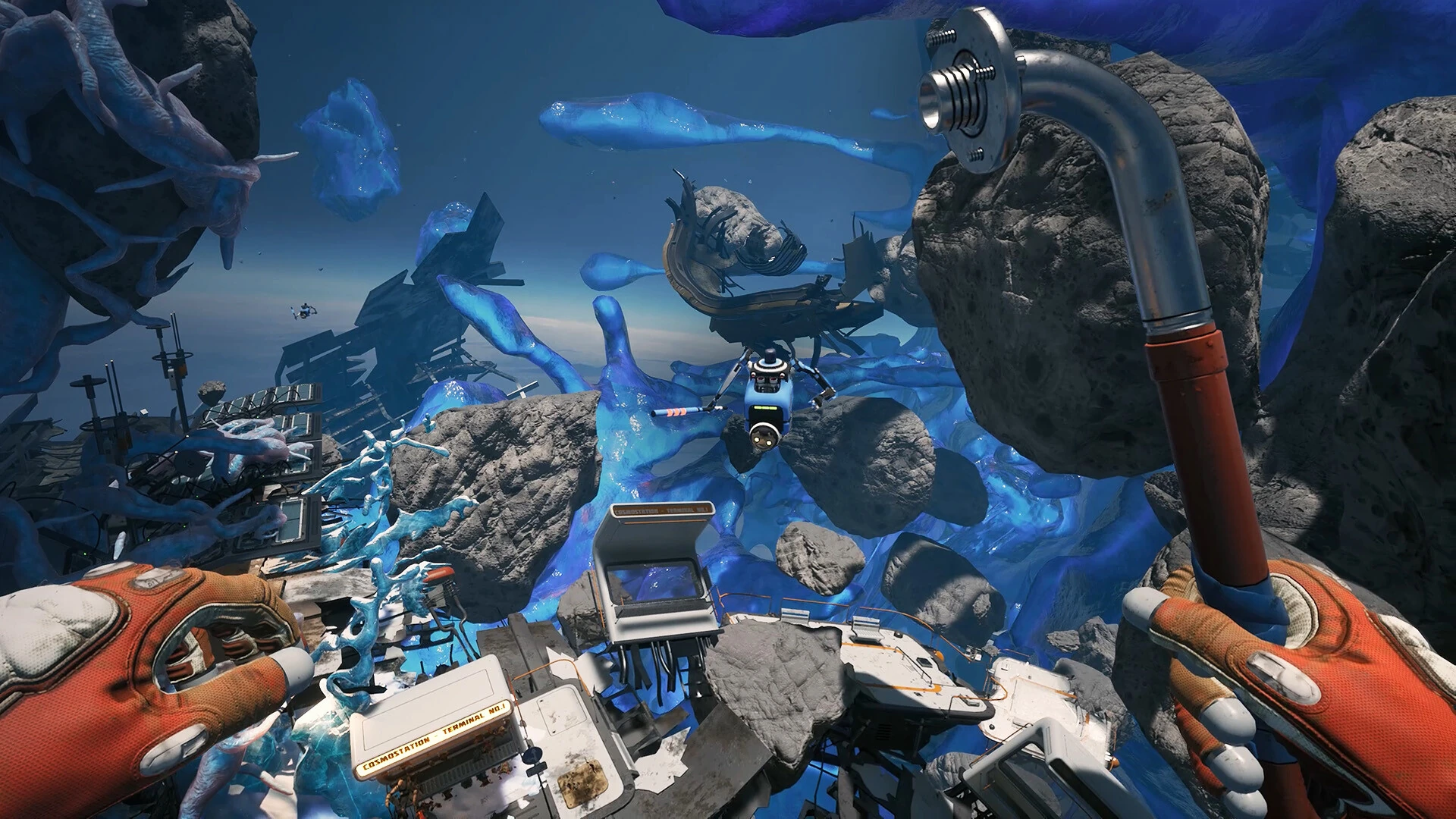
How to distinguish background lore, present objectives and Early Access story limits while keeping major revelations out of your searches.
You can begin with the sequel
The developers say Breathedge 2 is being written to stand on its own while introducing its world more deeply. Familiarity with the first game can add context and references, but this guide does not assume you have completed it. You do not need to read an ending summary before learning the current objectives. If you want to preserve the original game's surprises, avoid broad searches for the entire series timeline.
Start with what the present scene establishes: who is speaking, what immediate problem is described and what action the game asks you to take. Keep background questions separate from progression questions. You can follow an instruction without first understanding every joke or reference. That separation helps keep a simple help search from leading into a page that casually summarizes both games' major revelations.
Use narrow searches for narrow problems
When a task is unclear, search the exact objective name together with Breathedge 2 and, when relevant, the current version. Avoid searching a character's ultimate fate or a complete campaign walkthrough merely because you need one interaction. A focused query is more likely to surface the relevant fix and less likely to expose an unrelated ending.
Check the result's scope before reading the body. Does it cover the original game, the 2025 demo or the current Early Access release? Does it label spoilers? A title that promises a complete campaign ending is especially suspect while the sequel's full version remains unfinished. It may describe another game, speculate about unreleased content or omit the distinction between current chapter completion and the final story.
Read the active objective after dialogue
Comedy can surround an instruction with distractions. After a conversation, use the current quest state to identify the action that actually matters. If the speaker jokes about several impossible solutions, do not treat each joke as a hidden mechanic. Look for the interaction the game now presents and test that first.
The developer's redesign explains an effort to place important story information in calmer settings rather than dumping it over dangerous activity. Take advantage of those pauses when they occur. If you prefer to follow the story closely, finish reading before launching a new errand. If you skip dialogue, expect to rely more heavily on objective text and current interactions. Neither approach requires inventing narrative details that the game has not yet told you.
Treat jokes differently from factual instructions
Official Breathedge communication uses exaggerated jokes, including deliberately absurd quantities and mock production claims. When extracting guidance, identify the literal mechanical statement beneath the comic voice. A joke about an enormous number of posters is not a verified collectible count. A humorous promise about development speed is not a reliable release date.
The same caution applies to fan summaries. An entertaining paraphrase can make an uncertain claim sound definitive. For practical help, prefer a specific interaction, patch note or clearly identified observation. For story discussion, preserve uncertainty when a character is unreliable or a scene is deliberately ambiguous. You can enjoy the humor without turning it into an unsupported wiki fact.
Keep Early Access endings in context
The August 31 launch announcement makes clear that the available game is only part of the planned whole. Reaching the current content boundary is therefore not equivalent to seeing version 1.0's complete campaign conclusion. A guide should say whether it covers the end of the available chapter or the final story; those labels are not interchangeable.
If you reach a point where progress seems to stop, check for a current-content message and recent developer information before searching for a secret continuation. Preserve your save and note the active state. Do not follow a speculative list of hidden triggers simply because somebody assumes every narrative thread must resolve in the launch chapter. Unfinished development is a real boundary, not automatically a puzzle.
Write your own spoiler-safe notes
A small note can preserve enough context for a return without summarizing every reveal. Record your current goal, the character who assigned it and any unresolved practical question. Keep major story interpretations in a separate section if you want to discuss them later. This makes it easier to ask for help without accidentally broadcasting a twist to other players.
When sharing a question, lead with the task and the interaction that failed. Add only the story detail necessary to identify the scene. If the answer requires a reveal, ask for the smallest hint first. This approach works especially well in an evolving game: it keeps support requests precise, limits accidental spoilers and leaves room for the story to develop as later chapters arrive.
Know the recurring roles without reading their endings
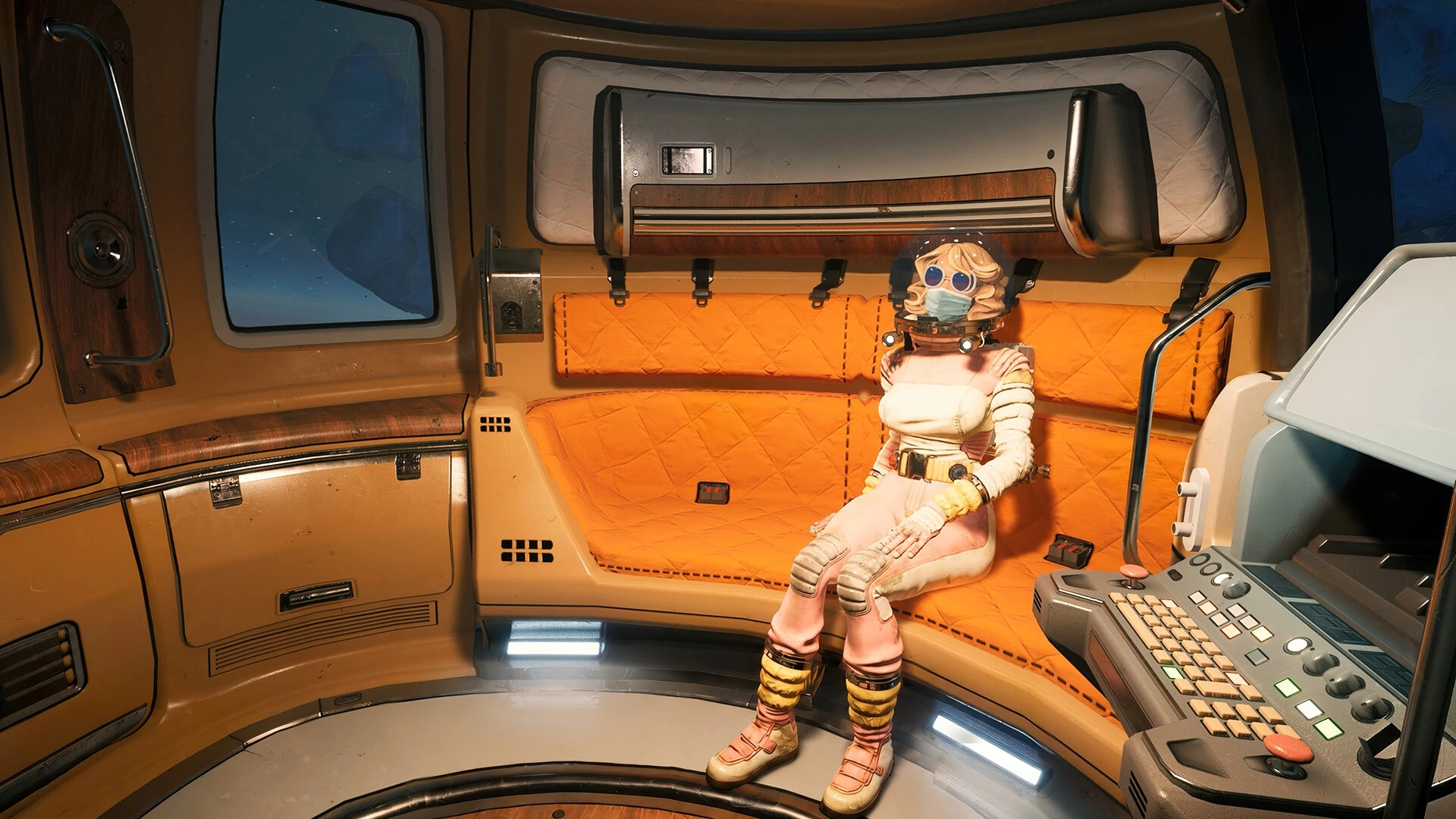
The central perspective is the ordinary Man, accompanied by the Suit and the immortal Chicken, with Babe an important recurring character. Those names are enough to orient a new reader without explaining how every relationship developed in the original. When the game introduces another person or machine, learn the immediate role first: who needs help, who provides information and what the current scene asks of you.
Avoid filling gaps with fan theories merely because a relationship feels unfamiliar. A sequel can reveal background gradually, and not understanding every reference immediately is different from missing essential instructions. If you need context, seek a short spoiler-labeled character introduction rather than an exhaustive biography. A good introduction distinguishes established identity from later revelations. That lets you enjoy the present dialogue while preserving the option to play the first game without already knowing its major turns.
Treat early developer interviews as development context
In its 2023 questions post, the team described a voiced ensemble and gave Babe a significant role rather than treating the Suit as the only speaking presence. That is useful context for why the sequel spends more attention on interactions among characters. It should not be read as a complete transcript of the final game or a guarantee that every early idea appears unchanged.
When an old interview discusses a future scene or mechanic, check its date before using it to explain the current story. Development plans can change. A missing preview element does not automatically imply hidden content, a secret route or a bug. For story understanding, the current game is the first reference; older announcements help explain intent. Keeping those roles separate prevents a promotional detail from becoming an invented piece of canon that the released chapter never establishes.
Distinguish character speech from an objective instruction
A character can joke, exaggerate or give context while the actual task remains simple. After a long exchange, ask what changed in the playable situation. Did a new interaction become available? Did the objective identify a new place? Did you receive an item or a clear requirement? Those changes are more reliable progression clues than trying to interpret every comic line as a literal command.
If the dialogue and objective seem to disagree, test the current objective's interaction first and keep the discrepancy precise. You can ask for help by describing the action, without posting the whole scene. This protects other players from unnecessary spoilers and keeps the answer focused. It also makes it easier to distinguish a confusing translation from an actual quest issue. The relevant evidence is the instruction the game expects you to act on, not every piece of surrounding characterization.
Use a spoiler ladder when asking for help
Start with the smallest useful request: whether you are in the correct area, which kind of interaction to inspect or whether the task is affected by a known issue. If that is not enough, ask for a more specific hint. Request a full solution only when you want one. This gives the person helping you a clear boundary and reduces the chance they will answer a minor question with the entire sequence.
You can apply the same method when reading a guide. Begin with its quick answer or the relevant heading, then stop once you have enough information to continue. Avoid scrolling through later sections simply because the page is open. If a guide does not separate chapters or mark spoilers, use a different source for a narrow question. The aim is to preserve discovery while still removing the friction that prevents you from playing.
Keep your current chapter separate from future content
A discussion of planned chapters can contain hints about where the story is heading even when it does not describe a finished scene. If you prefer minimal foreknowledge, use roadmap information only to understand availability and avoid reading speculative narrative summaries. You can know that more story is planned without learning every advertised location or character idea.
When a page calls something the ending, check whether it means the end of currently available Early Access quests. That label can change as the game expands. A complete-campaign interpretation is not justified simply because a current walkthrough reaches its last page. Preserve the distinction in your own discussions too. Saying you reached the present content boundary is clearer than announcing that you finished the whole story, especially for players deciding whether to begin now or wait for version 1.0.
Make translation a reading aid, not a source of extra lore
Comic names and deliberately awkward phrasing can shift across languages. If two guides use different words for what appears to be the same object, compare the action and location before assuming there are two separate things. Keep recurring proper names recognizable in your notes. A literal translation can lose a joke without changing the task.
If you report confusing text, include the interface language and the exact short phrase needed to identify the issue. Explain what you thought it meant and what the interaction actually required. That is useful localization feedback. Avoid constructing a story theory from a wording discrepancy until you know it is intentional. The practical goal is to follow the scene and perform the correct action, while leaving interpretation open when the evidence is merely a difference between translations.
Separate observation, interpretation and speculation
An observation is something the current scene shows or says. An interpretation is your explanation of its meaning. Speculation is a guess about what may happen later. Keeping these separate makes story discussion much clearer. You can enjoy theorizing without presenting the theory as an established fact or sending another player to search for content that does not exist.
In a personal note, use phrases such as 'the scene shows' and 'I think this suggests' when the distinction matters. If you share the note, identify the point in the story it assumes. Avoid using later information to answer an earlier question unless the other player explicitly wants it. This is a small courtesy that also improves accuracy: it prevents hindsight from being mistaken for something a first-time player should already understand.
Choose whether to play the original based on interest
If you enjoy the sequel's characters and want more context, the original is a natural place to look. That does not mean you must stop the sequel immediately or read a summary of the original's ending. Decide whether you want the full experience, a minimal background explanation or simply to continue the current adventure. Each choice preserves a different balance of time and discovery.
If you choose a background summary, check its spoiler boundary before reading. A page labeled introduction should not require a complete plot recap to answer who a recurring character is. If you choose to play the original later, keep broad searches away from ending discussions in the meantime. The most useful story guide supports your preferred pace. It explains enough to remove confusion while leaving the game room to deliver its own reveals, jokes and character moments.
Leave yourself a spoiler-safe return note
At the end of a session, write the current practical goal and one sentence of context you need to remember why it matters. Keep unresolved story questions separately. When you return, the practical note tells you what to do, while the questions remind you what to watch for without turning a theory into an instruction.
If a long break makes a scene hard to remember, reread only the context relevant to the active task before searching more widely. This keeps you from accidentally jumping ahead in a walkthrough. A concise note can preserve both continuity and surprise: you know where your run stands, you know which question remains open and you can let the next scene answer it instead of having the answer supplied by an unrelated search result.
When sharing that note, remove theories that reveal later discoveries to someone behind you. A task name and a description of the failed interaction usually provide enough context for help. Save broader interpretation for a discussion whose participants have reached the same point.
Sources & verification
This article combines cited facts with practical editorial advice. Follow the version and uncertainty notes before applying an older route.