Read the current survival balance, decide when to return and choose between immediate needs and useful machine upgrades.
Use the current balance as your starting point
Hotfix 0.8.6 reduces the standard-mode drain of food, water and fatigue by 15 percent. This is a relative change to those rates, not a statement that every survival meter lasts a particular number of minutes. Your actual outing still depends on what you do, your condition and the current build. Do not copy a timer from an older recording and treat it as a universal safe limit.
Begin with a familiar, modest task and observe your own reserves before and after it. The point is not to produce a perfect spreadsheet. It is to establish whether that sort of outing leaves you comfortable, marginal or unable to finish. That observation makes the next decision easier: repeat the route, shorten it, change preparation or adjust difficulty. A practical baseline is more useful than an unverified claim about maximum range.
Solve the nearest limiting need
When several systems demand attention, focus first on the need that will stop your next useful action. A future equipment improvement has little value if you cannot complete the short trip needed to obtain it. Conversely, constantly satisfying only the immediate meter can leave you repeating an inefficient loop. The useful question is whether a small repair or preparation step will make the next few outings more manageable.
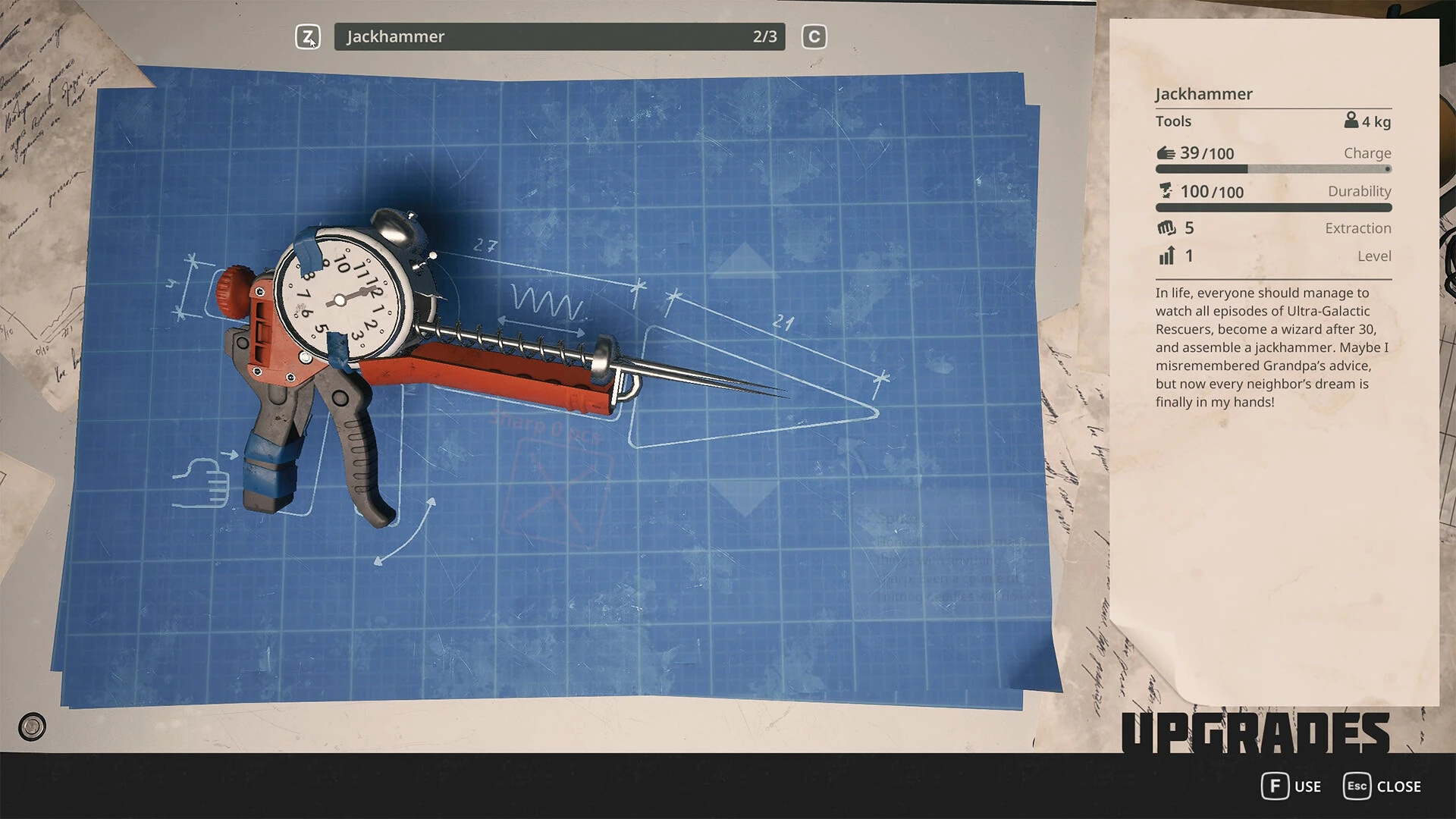
Separate immediate survival from infrastructure decisions. Deal with the urgent condition, then inspect the machine or equipment improvement you have evidence for. Avoid spending the same scarce component twice in your mental plan. If a part could improve a tool or repair a food-related device, choose the use that resolves the clearer bottleneck in your current run. There is no verified universal ordering that applies to every inventory and difficulty.

Machines are commitments worth understanding
The developer's redesign describes processing devices and repairable machines as part of the survival loop. The 0.8.6 notes also fix food and water machine modules incorrectly returning to full durability when removed. That means an old trick based on removing a module to refresh its condition is no longer a valid plan. Read the current condition and interaction information before swapping parts.
When you improve a machine, understand the practical purpose: what input it accepts, what result the current interface promises and what condition the installed components are in. This guide does not supply guessed recipes or processing yields. If those values matter to your decision, inspect them in the current build and compare the actual result with the displayed requirement. Keep enough flexibility to correct a mistaken assumption without dismantling your entire survival setup.
Let return conditions guide the outing
Choose a return condition before departing. It might be finishing the repair errand, obtaining the identified component or noticing that a reserve has become uncomfortable for the route back. A return condition is more useful than a vague intention to stay out as long as possible, because it remains clear when new distractions appear.
Do not wait for the worst possible condition just to prove a route was efficient. A trip that returns early with the required item can unlock a better next trip. A trip that gathers more miscellaneous material but fails before returning does not achieve the same practical result. This is especially relevant when you are still learning the map or testing a changed system, because uncertainty itself adds time and attention costs.
Separate learning pressure from challenge preference
The same 0.8.6 announcement confirms that Easy and Story can be selected during a run without restarting. If you want time to read dialogue, inspect equipment or understand a quest, use the setting that gives you that room. You can make this decision based on your current goal rather than treating it as a permanent statement about your skill.
For a player who enjoys resource pressure, standard after the update may still be the right fit. For a player returning from the demo, lower pressure can make system changes easier to understand. When comparing advice with another player, mention the difficulty and patch. Otherwise a disagreement about what is feasible may simply reflect different settings. Avoid presenting one person's observed consumption as evidence that another person's game is malfunctioning.
Review the loop, not just the last meter
If survival repeatedly interrupts progress, look at the pattern. Are trips overloaded with optional tasks? Are you returning without the component you actually needed? Are you using an outdated interaction? Does the route require preparation you have not yet made? Each cause suggests a different fix. More supplies can mask the problem for one outing without making the loop better.
After a difficult session, choose one change for the next attempt: narrow the objective, bring the correct tool, use a more familiar route or alter difficulty. Observe whether it helps. This keeps the survival system understandable while the game continues to change. The most useful priority is the one that lets you complete the next meaningful action with enough reserve to benefit from it.
Read the condition that is actually limiting the route
A survival failure should be named accurately. If your route becomes impossible because of an environmental condition, more food may not address it. If the problem is an exhausted reserve after a long search, a different route or a shorter task may matter more than equipment. Look at the current indicators and the action you were performing before choosing the next improvement.
Write the failure in a way that suggests a test: the reserve became uncomfortable during searching, the condition worsened on entering this area, or the trip took longer because the required tool was missing. Each description leads to a different response. This prevents all survival problems being compressed into a vague need to gather more supplies. The aim is to identify the limiting factor for this outing, with this preparation, rather than declare one meter universally more important than the others in every part of the game.
Compare a direct trip with a working trip
Flying to a landmark and back measures a different commitment from doing work there. Searching, manipulating objects, reading prompts and fighting can extend the time away. If a route felt comfortable during reconnaissance but becomes difficult during the real task, account for that extra activity before assuming the survival system changed unexpectedly.
Plan the working trip around the task's slowest part. If you need to search an unfamiliar structure, leave more margin than for a known pickup. If you must carry an awkward object home, treat the return as its own task. You do not need exact drain numbers to recognize those differences. A useful estimate comes from comparable activity, not from the shortest possible travel time. This makes route preparation more reliable without inventing a universal oxygen threshold or claiming every player's difficulty behaves identically.
Use temporary boosts with a clear purpose
The developer's October 2025 discussion presents fatigue and rest as linked systems and mentions temporary ways to resist tiredness. Because that is a design discussion, this guide does not assume every described item or effect has the same current implementation. Read the current item's information before relying on a temporary effect. The practical question is what specific action the effect will let you finish.
A temporary benefit can be useful for completing a short return or a nearly finished task. It is a weaker foundation for an open-ended expedition whose duration you cannot estimate. Avoid using a boost merely to postpone deciding when to stop. If you repeatedly need temporary support on the same route, review the route's length and preparation rather than treating each repetition as an isolated emergency. That turns a survival consumable into a deliberate tool instead of a reason to keep extending every outing indefinitely.
Plan rest as part of the session
Rest is easier to manage when it has a place in the loop rather than appearing only after every other decision has failed. Check your current condition before committing to another major errand. If you are already due to return for crafting or repairs, combine that pause with whatever recovery the current game offers. Use the actual interface to confirm the effect instead of assuming a fixed amount of recovery from an old guide.
This is also a good moment to decide whether the next trip belongs in the current session. Starting a complicated search just before you intend to stop can leave you with an awkward unfinished state and poor notes. A short preparation session can be useful even without another expedition. You can organize the next requirement, check equipment and leave a clear objective for later. The practical benefit is continuity: the next session starts with a workable plan rather than an emergency you no longer remember creating.
Evaluate an upgrade over the trips you actually repeat
An improvement to a frequently used process can matter more than a dramatic upgrade that rarely affects your route. Think about where you repeatedly lose time or supplies. If the same preparation problem interrupts every outing, solving it may improve the whole loop. If an upgrade only helps a distant activity you are not currently doing, its value may be mostly future-facing.
Do not convert that reasoning into a universal purchase order. Your inventory and objectives determine which bottleneck is real. Compare the cost with the benefit you expect on the next few trips, then observe whether the improvement delivers it. If it does not, adjust the plan rather than buying more of the same upgrade automatically. This is a way to make maintenance and equipment choices practical without publishing an unsupported efficiency table or a supposed optimal setup for every player.
Protect inputs that serve more than one purpose
Before processing a whole stack, check whether any of it is already committed to a repair or another survival need. A resource can be plentiful in your current inventory and still be inconvenient to replace at the moment you need it. Process for an identified purpose first, then reassess the remainder. This avoids solving one immediate need by unintentionally creating another.
The habit is simple: compare the planned output with the next known requirements before confirming a large action. You do not need to reserve every item for a hypothetical future system. Reserve what you actually know you need, and keep uncertain plans labeled as uncertain. If you later discover a better use, change the reservation deliberately. This keeps gathering connected to real objectives instead of turning survival into either indiscriminate hoarding or indiscriminate processing.
Interpret another player's advice in context
A player saying a route is easy may have different equipment, a familiar path and a different difficulty. Their observation can still be useful, but ask which part applies to your situation. The location of a useful interaction may transfer while their comfortable reserve margin does not. Separate navigation information from performance claims.
When sharing your own advice, include the conditions that made it work. Say that a short route was comfortable with your current preparation, not that nobody should struggle there. If you are comparing pre-update and post-update experience, identify the build. That makes the conversation more useful and reduces false disagreement. Two players can accurately describe different experiences without either being mistaken; the important task is finding which difference changes the preparation you should make for your own next outing.
Use a recovery session when the loop has become confused
If several incomplete repairs and empty reserves have accumulated, spend a session restoring clarity rather than adding another distant objective. Identify the urgent need, the nearest useful action and the component already available for it. Complete that small loop, then choose the next one. A sequence of manageable tasks can be more productive than trying to solve every shortage in a single ambitious expedition.
End the recovery session when the next outing has a clear purpose and preparation. You do not need every machine perfected or every reserve maximized before playing again. The goal is to remove the uncertainty that caused repeated interruptions. Once you know what you are doing, what you need and why you will return, survival becomes a set of decisions you can manage rather than a collection of meters that seem to compete for attention without explanation.
For the next outing, check the actual inventory once more after crafting. A plan made before a repair may assume supplies that the repair consumed. Confirm that the item you intended to carry is equipped or available, that the task remains the same and that you know where to return. This final check is brief but practical: it catches a mismatch between your plan and the current state before the journey begins.
Sources & verification
This article combines cited facts with practical editorial advice. Follow the version and uncertainty notes before applying an older route.