Separate the current survival adventure from planned vehicles, bases and planetary features before committing to a long run.
The playable game is an opening chapter
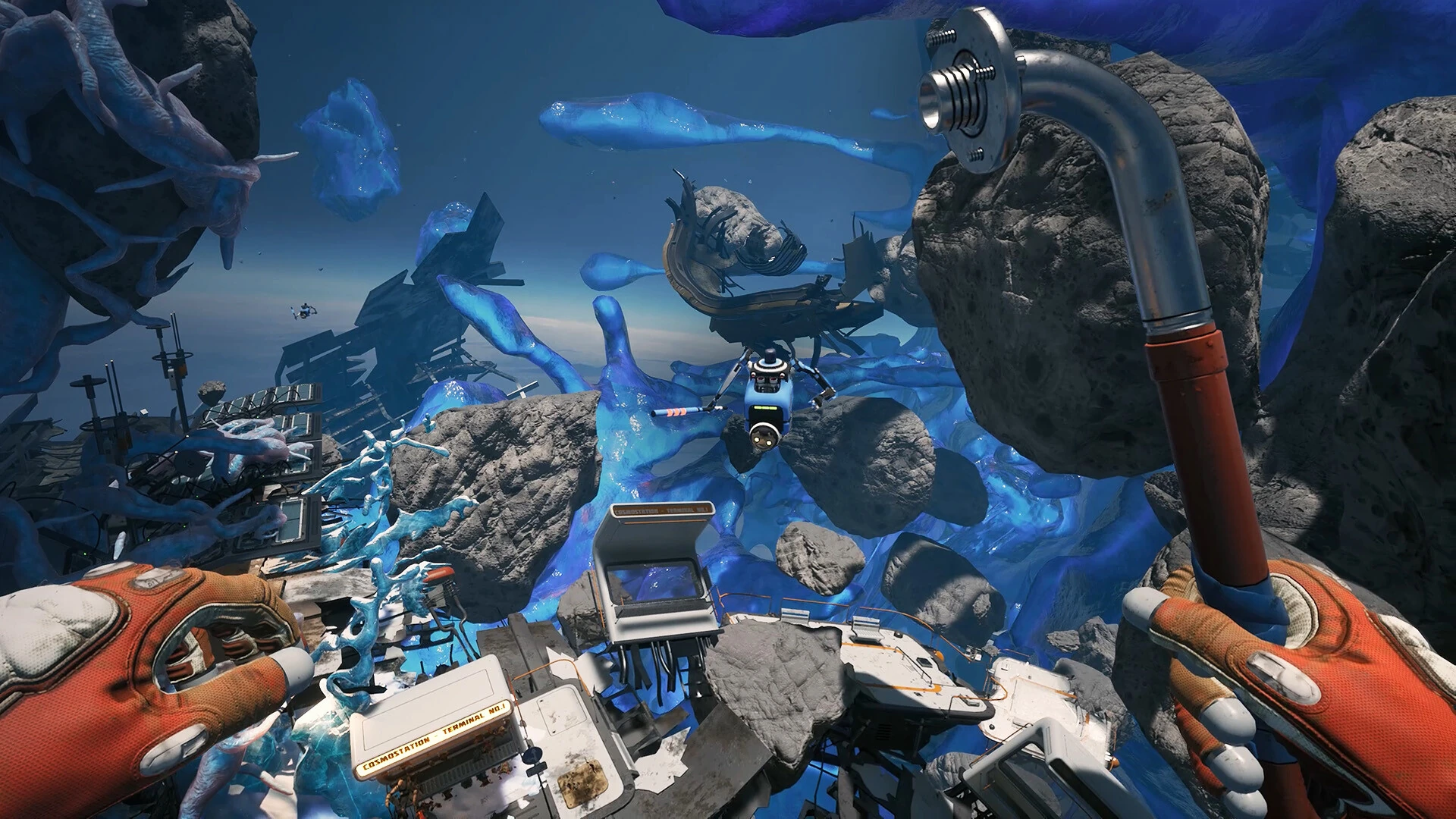
Breathedge 2 is available in Early Access, with an August 31, 2026 release date. It is not the completed version 1.0 campaign. The launch announcement describes the currently available work as a first chapter and makes clear that mechanics, balance and content can still change. That means two different questions deserve separate answers: whether the current section is interesting to play, and whether the whole planned game has arrived.
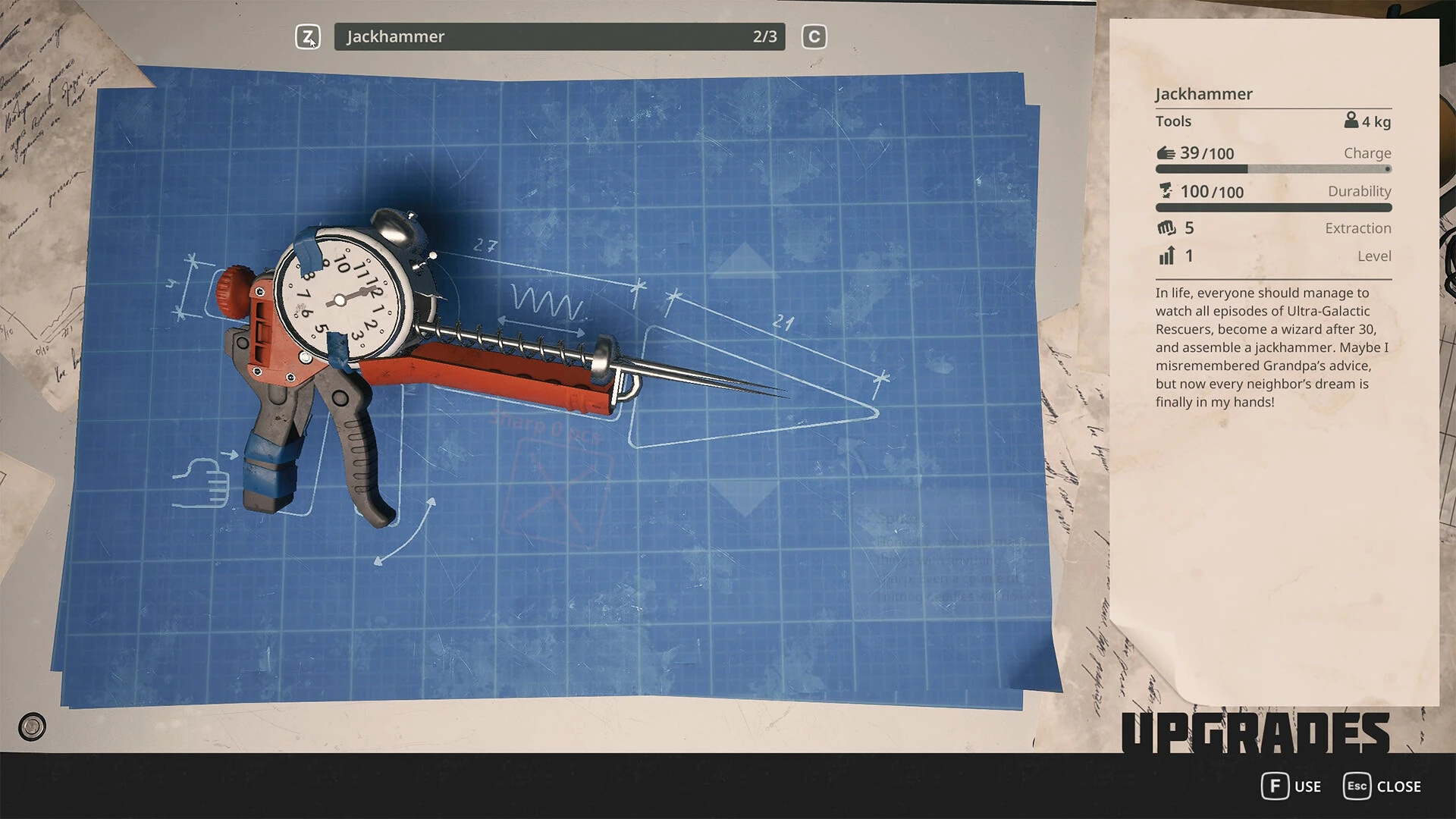
For a player deciding how to spend an evening, the useful distinction is between activities available now and systems you hope to build your entire run around. Survival, gathering, equipment, repairs, combat and questing are the current foundation described by the developers. A large independent base or a complete transport network should not be the premise of a launch-version playthrough merely because promotional material discusses those ideas. Start with the content in the build you can actually install.
Transport and base building have different milestones
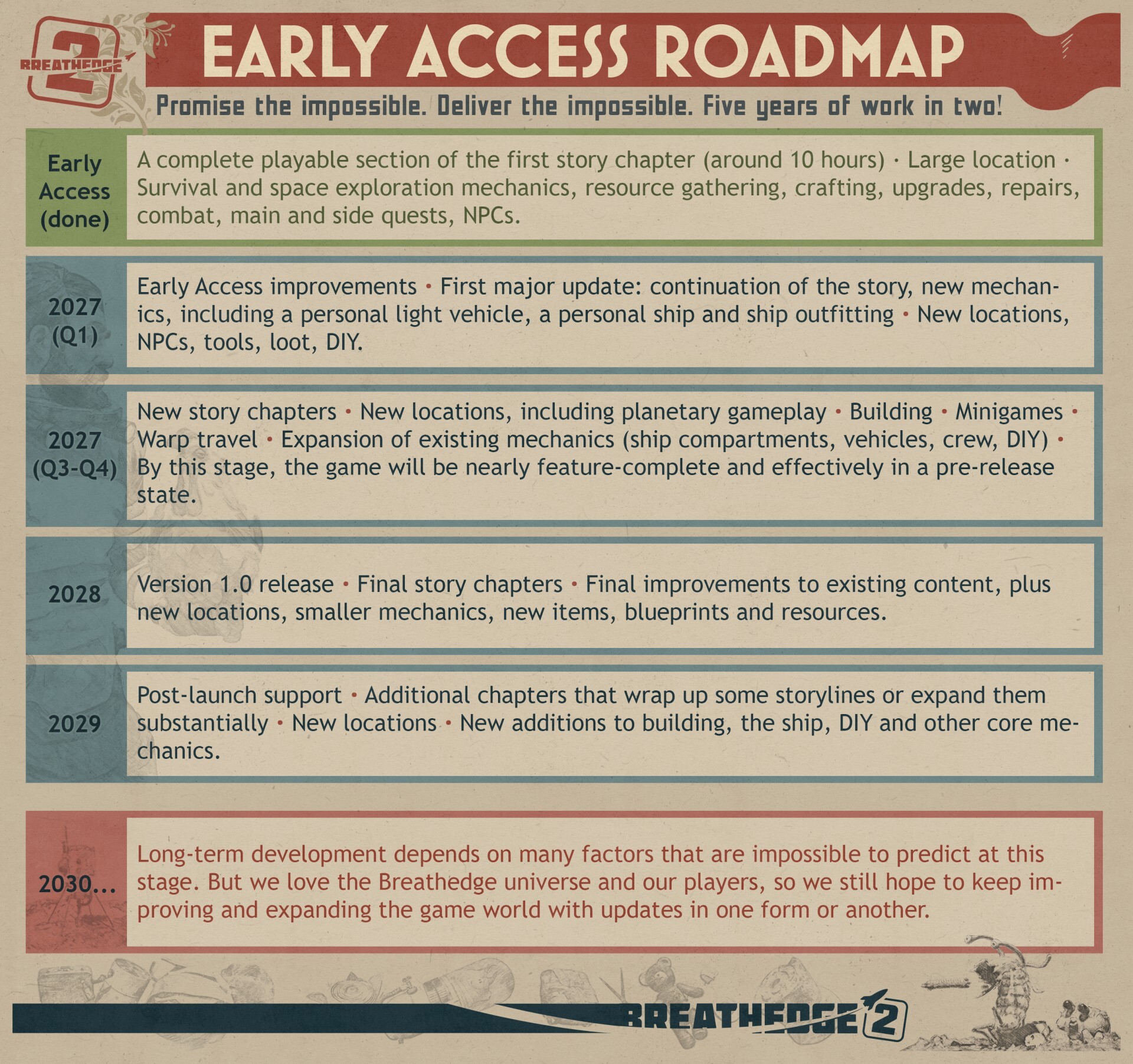
The June 6 scope announcement places personal transport in the first major expansion after the initial Early Access release. It places player-built bases, separate structures and planetary gameplay in a second major update. Those are development plans, not instructions for unlocking hidden launch features. The illustrated roadmap published with launch adds approximate calendar targets: the first quarter of 2027 for the first major update, the third and fourth quarters of 2027 for later expansion, and 2028 for version 1.0. Read these as targets rather than promises.
This ordering helps prevent a common waste of time: searching a starting area for a building tool that a video assumes will exist later. If a tutorial promises an elaborate base, check its game, version and source before following the material list. Original Breathedge videos are especially easy to confuse with sequel information. A familiar brand name, a similar suit or the same recurring characters do not establish that the underlying feature is present in Breathedge 2 today.
Choose a goal that fits the current build
A sensible first-run goal is to understand the available survival loop and complete the quests currently presented to you. A second goal can be to become more efficient: recognize what a task requires, bring the appropriate equipment and reduce unnecessary repeat trips. Both goals remain meaningful even if later updates add new areas. They ask you to learn systems that exist rather than stockpile around an unannounced recipe.
If your interest is almost entirely architectural, waiting for the base-building update may fit you better. If you like testing survival decisions, exploring the current area and giving useful feedback, Early Access can already serve that purpose. Neither choice requires guessing how many hundreds of hours future updates will provide. Evaluate the present content against your own preferred activity. A roadmap is evidence of intent, not a substitute for that evaluation.
Do not build an economy around speculative recipes
Players often respond to an incomplete roadmap by hoarding everything for future vehicles or bases. That can become a self-imposed grind with no verified payoff. We do not have an authoritative final recipe list for those future systems. A resource that seems thematically appropriate is not necessarily going to be required, and the eventual amounts, module rules or progression gates may change.
Use current demand to guide current gathering. Identify the repair or upgrade that blocks your next useful task, gather enough for that purpose and reassess afterward. You can keep interesting finds without claiming they are mandatory investments. If you enjoy collecting for its own sake, that is a valid playstyle; label it as such. It should not be sold to other players as an optimized preparation route for an update whose recipes are not yet documented.
Understand what buying Early Access does not promise
The developer says prices are expected to rise as substantial updates arrive, but a planned price increase should not pressure you into buying a game that does not yet contain the feature you want. Regional prices, discounts and taxes can change. Check the live Steam purchase page for your account rather than relying on a number copied into a guide. Likewise, the existence of a published roadmap does not make its dates contractual milestones.
Steam currently identifies Breathedge 2 as single-player. Do not buy it expecting cooperative survival simply because another space-crafting game offers multiplayer. The current store metadata identifies Windows support; it does not advertise native macOS or Linux versions. Compatibility layers and handheld behavior are separate questions and require their own evidence. Keeping these distinctions clear is more helpful than assembling a speculative platform list.
Make your future return easier
When you reach the end of the available content or decide to pause, leave yourself a short note: current version, active objective, the equipment you are using and the reason you stopped. On returning, read the update notes before making major inventory or progression decisions. That small record helps distinguish a deliberate balance change from a forgotten habit, and it makes any problem report far easier to reproduce.
Avoid promising yourself that the same save will carry perfectly through every major update unless the developer makes that guarantee. Preserve your existing progress before experimenting with a new build, and follow any migration instructions included in the update. The best roadmap habit is practical: check what shipped, identify the new systems you want to try and adjust your run around observed behavior. The game's future can be interesting without treating every future feature as already available.
Read the published roadmap in stages
The illustrated roadmap linked from the launch announcement gives more detail than the earlier June scope post. Its completed Early Access row describes a playable section of the first story chapter and estimates around ten hours. Treat that as the developer's approximate scope estimate, not a timed walkthrough or a promise that every player will finish in the same number of sessions. Exploration, difficulty and how much dialogue you read all affect your experience.
The next dated row targets the first quarter of 2027 for the first major update, including a light personal vehicle, a personal ship and ship outfitting. A later 2027 row, covering the third and fourth quarters, includes building and planetary gameplay alongside further expansion. The chart places version 1.0 in 2028 and additional support in 2029. These are targets in a roadmap, and the launch announcement explicitly treats the dates as approximate. Use them to understand the sequence, then check actual update announcements before assuming a feature has shipped.
A ship in promotional material is not a launch crafting recipe
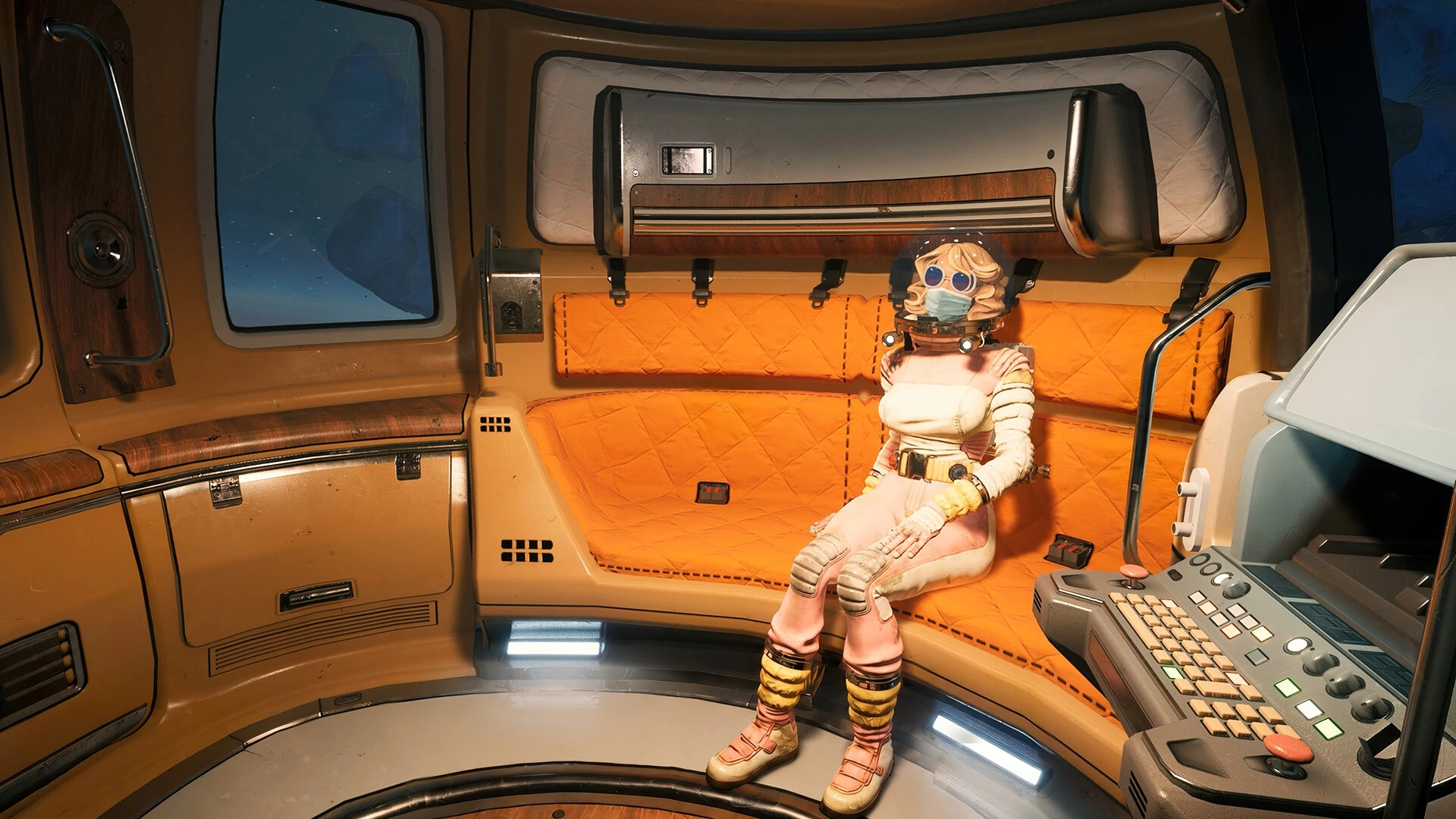
A trailer can show the direction of development without supplying a playable unlock route. When transport is your main interest, ask three concrete questions of any guide: which build was used, whether the vehicle can currently be obtained and whether the author actually demonstrates the interaction. A picture of a ship answers none of those questions on its own. This is especially relevant because ship systems are explicitly placed in a later roadmap milestone.
Do not spend a launch run searching for a complete outfitting menu merely because the phrase appears on the chart. You can still learn the current equipment and survival systems while waiting, but call that preparation in general skills rather than a guaranteed shortcut to future transport. There is no verified final ship bill of materials here. A responsible preparation plan keeps your present game enjoyable and leaves exact future requirements until the relevant update makes them observable.
Compare your PC with the current store listing
The current Steam listing specifies a 64-bit Windows installation and gives minimum hardware of an Intel Core i5-8400 or Ryzen 5 2600, 12 GB of memory and a GTX 1660 6 GB or the listed RX 5500 XT 6 GB. Recommended hardware moves to an i7-13700 or Ryzen 7 7700X, 16 GB of memory and an RTX 3070 8 GB or the listed RX 6700 XT 8 GB. Both tiers list DirectX 11 and 15 GB of available storage. These are the developer's published specifications, not measurements made for this guide.
Use the list to identify obvious mismatches before buying, but do not convert it into a promised frame rate. The store does not attach a resolution and frame-rate guarantee to those tiers. If your machine is close to a boundary, look for a current benchmark that actually names comparable hardware and settings. A video recorded on an unspecified high-end PC cannot establish performance on your laptop. Likewise, a report from the 2025 demo may not describe the current release's workload.
Website language and game language are different choices
This guide site can provide articles in languages that the game itself does not advertise. In the current Steam metadata, English and Russian are marked for full audio, while several additional languages are listed for text support. Italian and Indonesian are not listed as supported game languages in the retrieved metadata. A translated guide therefore should not be mistaken for a promise that the game's interface or spoken dialogue is available in the same language.
Check the live store language table before purchase if that distinction affects whether you can follow the story. Decide whether translated guide text is sufficient for your needs or whether you require in-game text in your preferred language. When using a guide in one language and the game in another, match objective names carefully and keep proper names recognizable. An apparent missing quest may be a translation mismatch rather than a content difference, so compare the described action as well as the title.
Evaluate controller support against your actual setup
Steam advertises full controller support and lists DualShock and DualSense support. That is useful compatibility information, but the launch hotfixes show why you should still consider your own devices. A general support label does not imply that every connected wheel, pedal set or unusual input combination has behaved perfectly on every build. The September 2 input fixes are relevant if your desktop has several gaming peripherals attached.
If controller play is essential to you, look for current feedback about the device and mode you intend to use. Distinguish button familiarity from a software fault: unfamiliar prompts and a game stuck in the wrong input mode are different problems. After installation, test menus, normal movement and switching inputs before committing to a long session. That small check lets you identify a practical limitation early, with enough detail to seek help. It is more useful than treating either a support badge or one old complaint as the complete answer.
Choose the right moment to start your run
Different players have different good entry points. If you enjoy a contained opening section and want to learn systems as they evolve, the current chapter may fit. If your desired activity depends on personal transport, the first major update is a more relevant checkpoint. If you want independent building and planetary exploration, follow the later milestone. If you want to experience the complete story in one continuous run, version 1.0 is the clearer target.
This is not a prediction that any milestone will arrive exactly on schedule. It is a way to connect your preference to the feature that would satisfy it. Put the feature first and the calendar second. When an update announcement appears, read what actually shipped rather than assuming everything in an earlier row arrived together. That habit also prevents disappointment if a release contains substantial work but not the particular mechanic you were waiting for.
Judge value by the activity you will actually play
A ten-hour scope estimate can sound large or small depending on what you enjoy doing. Someone who reads dialogue and experiments with equipment may spend their time differently from a player following objective markers directly. Neither style needs to justify itself by inflating a playtime number. Compare the current game's activities with how you normally play, and use present reviews or footage that clearly identify the Early Access build.
Avoid making a purchase decision solely from a distant support row. The roadmap's later years describe continued ambitions, not content included today. Likewise, do not assume that every current criticism will remain unchanged: the first week already brought balance, input and progression fixes. The useful assessment separates present strengths, present limitations and future plans. You can then decide whether to start now, revisit after a specific feature arrives or wait for the complete campaign, with a clear reason for your choice.
Check ownership and platform before following an offer
The original Breathedge, the sequel and the sequel demo are separate Steam products. An offer for the original does not establish ownership of Breathedge 2, and a demo entry in your Library does not mean the paid Early Access release is installed. Confirm the product title and store page before purchasing or troubleshooting a missing feature. This is particularly useful when a search result surfaces an older giveaway announcement alongside current sequel news. Read the offer period as well: a historical promotion is not evidence that the same terms remain available today. When in doubt, the live Library entry and current product page are the relevant references.
Sources & verification
This article combines cited facts with practical editorial advice. Follow the version and uncertainty notes before applying an older route.